ELEVATING B2B
MARKETING TO ITS
STRATEGIC FUTURE
MARKETING TO ITS
STRATEGIC FUTURE
The B2B CMO Project exists because marketing leadership is in crisis
The B2B CMO Project exists because marketing leadership is in crisis. CMOs are losing the seat at the table we only recently earned. While we've been obsessing over MQLs and attribution models, we should have been shaping markets and building brand equity.
The Project is working to create the community, research, and frameworks CMOs need to evolve from marketing executors to market creators, reclaiming their strategic role in an AI-disrupted world. It aims to redefine marketing's strategic role in driving sustainable revenue growth, moving beyond the “MQL gumball machine” mentality to become true market creators who work alongside CEOs, CFOs, and boards as business leaders.
We’re focused specifically on top marketing leaders at larger B2B companies because they face the most complex strategic challenges while having the fewest peer resources, educational opportunities, and tools to navigate them.
To ensure a high-caliber, peer community, members must generally be one of the following:
Agencies, vendors, and technology providers are not eligible to be community members, although relevant sponsorships may become available once the community is established.
Why Do We Need The B2B CMO Project?
The Chief Marketing Officer role is younger than you might think. While the modern CFO began taking strategic shape in the 1970s-1980s, the CMO as a formal role emerged much later, making it one of the newest additions to the C-suite.
Even then, early CMOs struggled for relevance. They owned market research, brand management, and advertising but couldn't connect those efforts to revenue, relegating marketing to a cost center that got cut first during downturns.
Everything changed in the 2000s. Digital marketing, CRM platforms, and marketing automation gave CMOs something their predecessors never had: the promise of measurable impact on revenue. Suddenly, we could track every email open, score every customer behavior, and generate a steady supply of Marketing Qualified Leads (MQLs) for SDRs and sales teams to build their pipeline. CMOs became the digital transformation catalysts, bringing new technologies and data-driven approaches that elevated marketing's perception across organizations.
But that success became our trap. The same measurement capabilities that earned credibility also created an obsession with short-term metrics. The relentless pressure to generate MQLs and hit quarterly pipeline targets pushed us toward tactics that ultimately hurt long-term sustainable growth: bombarding prospects with unwanted emails, gating content that should be freely accessible, and treating every form-fill as buying intent. Worse, our fixation on immediate, measurable results led us to systematically underinvest in brand building. By starving longer-term brand and awareness efforts that couldn't be easily attributed to next quarter's pipeline, we limited our own growth potential.
Recent economic pressures have intensified this dynamic. With post-ZIRP budget cuts, CMOs found themselves under renewed pressure to demonstrate more immediate pipeline with less budget, causing even more damage to the longer-term brand and market-building initiatives that drive sustainable growth.
But that success became our trap. The same measurement capabilities that earned credibility also created an obsession with short-term metrics.
The result is marketing leadership in crisis. LinkedIn shows a 62% year-over-year decrease in CMO job postings. Spencer Stuart reports 34% of Fortune 500 companies don’t have an enterprise-level CMO, and only 40% of Fortune 500 companies actually call their marketing leader "CMO". In B2B SaaS, our own research shows that 30% of the top 50 SaaS companies don't have a CMO at all.
32% of CEOs don’t trust their CMOs
- Boathouse Research
The problem runs deeper than job cuts. Boathouse research found only 32% of CEOs trust their CMOs, and 56% believe their marketing leaders prioritize personal interests over company goals. CMOs today are not viewed as strategic drivers, they’re seen as recipients of strategy. Instead of being the source of customer insight and market understanding that shapes company direction,they’ve been relegated to executing tactics handed down from above.
And the personal toll is real. In a study from Bospar, CMO Huddles, and Redpoint, 67% of marketing leaders report that the challenges have impacted their well-being, with 80% exercising less and 70% taking less time off. An increasing number of CMOs are stepping away from the role, believing the role is systematically set up for failure, and opting for fractional work instead.
The current CMO role — trapped between impossible MQL targets and shrinking budgets — may indeed be set up for failure. But that creates an opening to fundamentally redefine what marketing leadership should be.
The CMOs who thrive will be those who evolve from marketing executors to market creators, owning deep market expertise that shapes company strategy. Instead of just running campaigns, they'll own positioning, customer insights, brand reputation, alliances and market momentum. They'll be the source of market intelligence that guides product development, pricing strategy, and competitive positioning. They'll create marketing that truly drives revenue by shaping market perceptions so you're the first company buyers contact when they're ready to purchase.
And this is all happening as AI completely disrupts every aspect of go-to-market. The old playbook of content, generic email, and outbound SDR outreach becomes even more obsolete when buyers use AI assistants to filter out unwanted messaging. Only truly strategic, human-centered marketing will break through.
This creates even more opportunity for the CMO of the future. As AI handles more tactical execution, it frees marketers to focus on what humans do best and what AI cannot replicate: understanding markets, shaping narratives, building authentic relationships, and creating experiences that resonate on an emotional level.
To master this transition, CMOs need to build new capabilities: strategic business acumen (P&L, market dynamics), AI-powered insights and automation, brand and category creation, cross-functional executive leadership, and how to demonstrate marketing's impact on long-term enterprise value.
Focus on what humans do best: understanding markets, shaping narratives, building authentic relationships, and creating experiences that resonate on an emotional level.
The time is now. CMOs who master this transition won't just survive — they'll reclaim their strategic role and become indispensable to sustainable growth.
The B2B CMO Project exists to give marketing leaders the tools and support to navigate this transition.
We’re building the community, research, and frameworks CMOs need to reclaim their strategic role and drive sustainable growth:
[fs-toc-omit] Together, we will liberate marketing from endless MQL goals and short-term thinking, creating a new path forward that establishes marketing as the strategic market authority every growing company needs.
Podcast
Building C-Suite Buy-In & Selling The Brand Story
With Tricia Gellman, CMO of Box
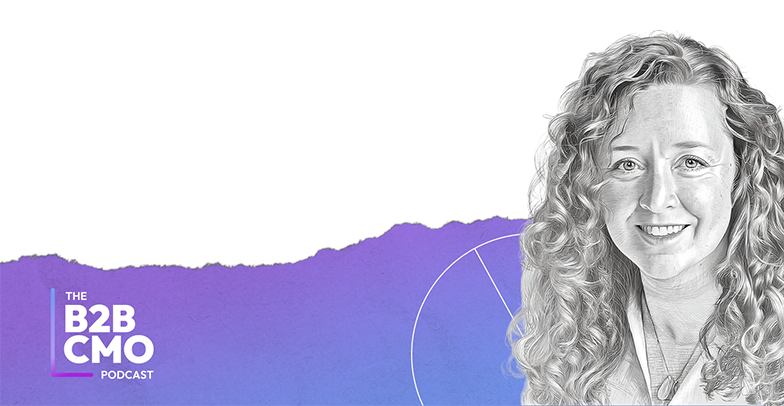
Conversations with Today’s Leading B2B CMOs
Real conversations with marketing leaders sharing the strategies, challenges, and leadership lessons behind today’s most successful B2B organizations.
GO TO EPISODE

An Evening for CMOs: Leadership, Influence & Executive Impact
Join an exclusive dinner experience designed for today’s marketing leaders navigating the evolving role of the CMO. This evening will focus on leadership, strengthening C-suite influence, and ensuring marketing maintains a strategic seat at the executive table.